Recently I've came across an interesting case of names transformation to so called "slug" format:
First, quite readable solution:Step 1: covert to lowercase Step 2: replace any alpheNumeric to hypen(-). Start to End of the string: Don't consider unicodes Step 3: Remove any adjacent hypen(-) Step 4: Remove trailing or leading hyphens
    public static final String CHARS_REG = "[^a-zA-Z0-9]";
    public static final String DOUBLE_REG = "[-]+";
    public static final String TRIM_REG = "-$|^-";
    public static final String DASH = "-";
    static final Pattern CHARS = Pattern.compile(CHARS_REG);
    static final Pattern DOUBLE = Pattern.compile(DOUBLE_REG);
    static final Pattern TRIM = Pattern.compile(TRIM_REG);

    public static String makeSlugNamePatterny(String name) {
        String it = name.toLowerCase().trim();
        it = CHARS.matcher(it).replaceAll(DASH);
        it = DOUBLE.matcher(it).replaceAll(DASH);
        it = TRIM.matcher(it).replaceAll("");
        return it;
    }
Unfortunately, out-of-the-box java regexp support can not trim and lowercase, so we see 5 operations here. It was curious for me to implement it regex-free and to compare performance:
     public static String makeSlugNameOptimized(String name) {
        String result = name + " ";
        StringBuilder temp = new StringBuilder();
        char ch1 = 0;
        char ch2 = toLowCaseAlfanumeric(result.charAt(0));
        for (int i = 0; i < result.length() - 1; i++) {
            ch1 = ch2;
            ch2 = toLowCaseAlfanumeric(result.charAt(i + 1));
            if (ch2 != ch1) {
                temp.append(ch1);
            } else if ('-' != ch1) {
                temp.append(ch1);
            }
        }

        while ('-' == temp.charAt(0)) {
            temp.deleteCharAt(0);
        }
        while ('-' == temp.charAt(temp.length() - 1)) {
            temp.deleteCharAt(temp.length() - 1);
        }

        return temp.toString();
    }

    private static final int Aa = 'a' - 'A';

    private static char toLowCaseAlfanumeric(char c) {
        if (c >= 'a' && c <= 'z') {
            return c;
        }
        if (c >= 'A' && c <= 'Z') {
            return (char) (c + Aa);
        }
        if (c >= '0' && c <= '9') {
            return c;
        }
        return '-';
    }
Note that optimized case doesn't trim or lowercase separately - it's a part of the loop. On 500 random strings 500 times gave following performance: patterny-2059 milliseconds, optimised - 277.
Conclusion
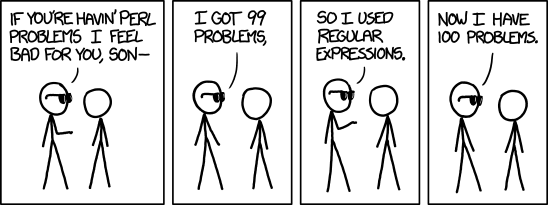
10x time improvements - it's the cost of regexps in my case. Readability can be improved by extracting some methods, so it should not be a concern here. Generally speaking, either regexp is simple - in this case you can work around like I did, or it's complex - in this case it's both slow and unreadable.
Basically, as classic(https://xkcd.com/1171/) says: